How to Find a Reliable Carport Manufacturer?
Choosing a reliable carport manufacturer involves more than comparing online prices. A dependable supplier should explain materials, engineering methods, production capacity, and installation support clearly. During factory discussions, ask to see recent project photos, welding details, coating samples, and load-test documentation. A serious manufacturer can identify the steel grade, roof system, drainage plan, and expected service life. Vague answers deserve caution.
Carport manufacturing requires consistent quality at every stage, from cutting steel tubes to packaging finished frames. Check whether the company uses documented inspections and traceable material records. Reviews can help, but they should be supported by references from real customers. If possible, contact a recent buyer and ask about delivery accuracy, communication, and replacement handling. Small details matter. Do the bolt holes align? Are labels readable? Does the protective coating cover hidden edges? These details often reveal factory discipline.
A reliable manufacturer should also study your site, climate, vehicle dimensions, and local approval requirements before recommending a design. Be cautious when a supplier promises the lowest price without discussing wind, snow, drainage, or foundation conditions. Cheap decisions can become expensive repairs. No manufacturer is perfect, and even experienced suppliers may miss a detail. That is why written specifications, sample approval, warranty terms, and practical questions remain essential. The right partner does not only sell a shelter. It provides evidence, accepts scrutiny, and improves when problems appear.
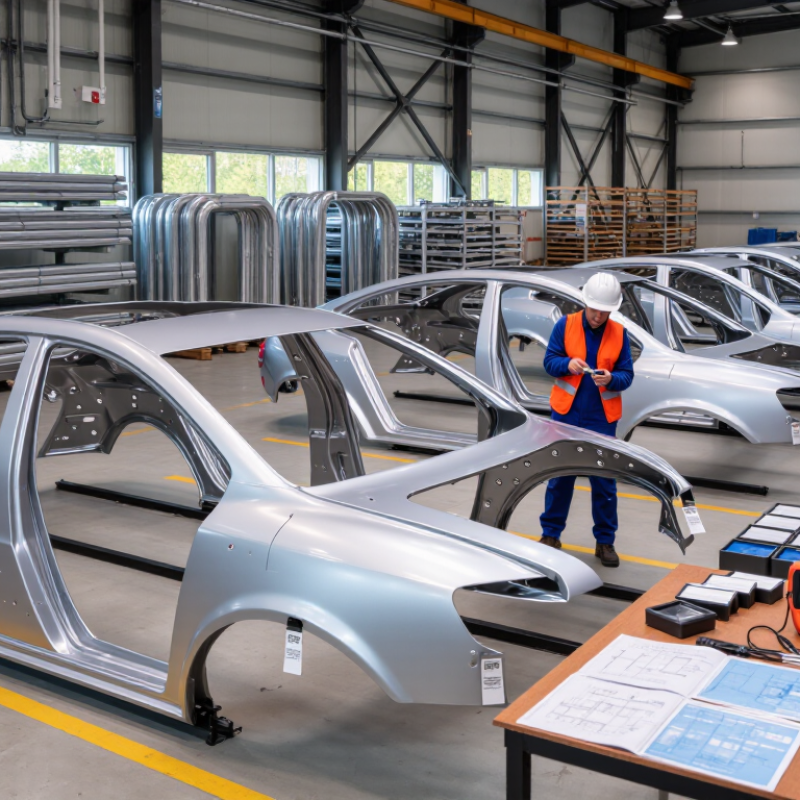
Define Your Carport Needs and Project Requirements
Before contacting a carport manufacturer, define the real job, not only the vehicle type. Measure the vehicle’s length, width, height, mirrors, roof racks, and opening clearance. Add space for doors, walking paths, storage, and future vehicle changes. A compact drawing helps expose mistakes early. It is easy to underestimate turning space.
Check the site conditions carefully. NOAA’s 1991–2020 Climate Normals provide 30-year precipitation, snowfall, temperature, and wind records for local planning. Compare these figures with the manufacturer’s structural calculations. ASCE 7-22 also identifies site-specific wind, snow, seismic, and rain loads used in structural design. Ask for the design loads in writing. Do not accept “heavy duty” as technical evidence. Confirm foundation depth, anchor spacing, drainage direction, roof pitch, corrosion protection, and connection details. A carport beside a salty road may need different protection than one in a dry inland area. The difference is practical.
Consider vehicle access during storms. Measure gutter discharge, nearby trees, fences, and doors. Leave enough headroom for roof-mounted equipment. The U.S. Department of Transportation’s Federal Highway Administration publishes vehicle classification and roadway-use data, showing how vehicle fleets continue changing toward larger utility vehicles. Your current sedan may not be the project’s final requirement. I would rather design for a measured future need than rebuild after two years. Still, oversized structures waste money and can create unnecessary permitting questions. Share photos, a simple site plan, and local weather data with each manufacturer. Their response will reveal whether they engineer the project or merely sell a standard frame.
How to Find a Reliable Carport Manufacturer? — Define Your Carport Needs and Project Requirements
| Requirement Dimension | Key Information to Define | Typical Options or Reference Data | Why It Matters When Choosing a Manufacturer | Evidence to Request | Recommended Project Record |
|---|---|---|---|---|---|
| Vehicle Capacity | Number, type, and size of vehicles to be sheltered | One vehicle, two vehicles, recreational vehicle, trailer, boat, or commercial vehicle | The vehicle dimensions determine the required width, length, roof clearance, and structural loading requirements. | Dimensioned layout drawing showing clear internal space and entry clearance | Vehicle length, width, height, turning space, and door-opening clearance |
| Overall Dimensions | Required external footprint and usable internal clearance | Common residential layouts include approximately 3–4 m width for one car and 5.5–7 m width for two cars; final dimensions depend on local use | A reliable manufacturer should design around actual use rather than offer only fixed standard sizes. | Scaled plan, elevation drawings, and a written dimension schedule | Overall width, length, eave height, peak height, and clear span |
| Site Conditions | Ground type, slope, drainage, access, and nearby structures | Concrete slab, asphalt, compacted gravel, soil, paved driveway, or uneven ground | Foundation and anchoring methods must be suitable for the actual site. Poor site assessment can cause movement, water accumulation, or installation delays. | Site survey requirements, foundation plan, and installation method statement | Site address, ground surface, slope, drainage route, utility locations, and access limitations |
| Weather Loads | Local wind, snow, rain, and exposure conditions | Wind and snow loads vary substantially by location, elevation, terrain, and applicable building code | Structural capacity must be calculated for the project location instead of relying only on a generic product rating. | Structural calculations, design load assumptions, and compliance documentation | Local design wind speed, ground snow load where applicable, rainfall exposure, and site elevation |
| Roof Design | Roof profile, pitch, drainage, and desired coverage | Flat, single-slope, gable, or curved roof; open-sided or partially enclosed configuration | Roof shape affects drainage, headroom, snow performance, appearance, and compatibility with the site. | Roof cross-section, drainage details, gutter options, and material specification | Roof style, pitch, overhang, drainage direction, and required rainwater collection |
| Materials and Protection | Frame material, roof material, corrosion protection, and finish | Galvanized or coated steel frames; steel, aluminum, polycarbonate, or other approved roof systems | Material selection influences durability, maintenance, corrosion resistance, weight, and total project cost. | Material grades, coating information, thickness specifications, and maintenance instructions | Frame material, member sizes, coating type, roof composition, color, and expected service conditions |
| Foundation and Anchoring | Connection between the structure and the supporting surface | Concrete footings, slab anchors, ground screws, or other engineered anchoring systems | Anchoring must transfer wind and other loads safely into the ground or foundation. | Anchor layout, fastener specifications, foundation requirements, and installation tolerances | Foundation type, concrete strength if applicable, anchor spacing, and edge distances |
| Permits and Compliance | Local planning, building, zoning, and property-boundary requirements | Requirements may depend on structure size, location, permanence, setbacks, and local regulations | A dependable manufacturer should identify the information needed for approval and provide drawings suitable for review where applicable. | Code references, engineering documents, drawings, and permit-support scope | Authority having jurisdiction, setback rules, height limits, lot coverage, and permit status |
| Installation Scope | Who will install the carport and what site preparation is included | Manufacturer installation, qualified contractor installation, or customer-managed assembly | Clear responsibility prevents disputes over foundations, equipment, labor, waste removal, and site restoration. | Detailed installation scope, crew requirements, schedule, exclusions, and warranty conditions | Installer responsibility, equipment access, expected duration, site preparation, and cleanup duties |
| Delivery and Logistics | Transportation route, unloading method, storage, and delivery timing | Flat-pack components, preassembled sections, crane unloading, forklift unloading, or manual handling | Large structural components require suitable access and safe unloading arrangements. | Packing list, delivery dimensions, unloading requirements, and logistics plan | Delivery address, access width, vehicle restrictions, unloading equipment, and preferred delivery window |
| Customization Needs | Openings, walls, doors, lighting, solar readiness, storage, and drainage accessories | Open-sided design, partial enclosure, sliding or sectional doors, gutters, downpipes, skylights, or electrical provisions | Customization affects structural design, permitting, lead time, and compatibility between components. | Final drawings, options schedule, change-control process, and itemized quotation | Required accessories, future expansion plans, electrical routes, and preferred finishes |
| Budget and Commercial Terms | Total installed cost and payment responsibilities | Separate costs may apply to design, permits, foundations, delivery, installation, taxes, and site preparation | A low purchase price may exclude essential project costs. Comparable quotations should use the same scope. | Itemized quotation, inclusions, exclusions, payment schedule, validity period, and change-order terms | Target budget, contingency allowance, taxes, installation cost, and excluded work |
| Quality Verification | Manufacturing controls, inspection, traceability, and documentation | Dimensional inspection, weld inspection, coating checks, batch traceability, and documented quality procedures | Documented production controls provide more confidence than appearance or marketing claims alone. | Inspection records, material certificates, quality procedures, and sample production details | Required inspection points, acceptance criteria, document package, and responsible reviewer |
| Warranty and Support | Coverage for structure, finishes, roof components, workmanship, and replacement parts | Warranty periods and exclusions differ by component and environmental exposure | Clear warranty terms reveal how defects, corrosion, leaks, installation issues, and spare parts will be handled. | Written warranty, claims procedure, response times, exclusions, and after-sales contact process | Warranty start date, covered components, maintenance duties, claim documents, and service expectations |
| Final Manufacturer Assessment | Ability to satisfy the documented technical, commercial, and service requirements | Compare at least several complete quotations using identical dimensions, loads, materials, and installation scope | The most reliable choice is the supplier that provides verifiable documentation, transparent pricing, suitable engineering, and clear responsibility. | Completed compliance checklist, references for comparable projects, drawings, quotation, and contract terms | Approved for Final Comparison Proceed only after technical scope and commercial exclusions are confirmed in writing. |
Related Posts
-
What Are the Top Carport Manufacturing Types?
-
Top Carport Design Ideas for Your Home How to Choose the Best Option?
-

China Top Steel Structures Innovations for Modern Architecture?
-
How to Choose the Best Outdoor Canopies for Your Needs?
-

How to Start Carport Manufacturing Business Successfully?
-

Top 5 Tips for Choosing Pre Engineered Buildings Today?