What Are the Top Architectural Metal Structures from China?
China has become a major source of architectural metal structures, from steel space frames to aluminum façades. The scale is substantial. World Steel Association’s World Steel in Figures 2025 reports that China produced about 1,005 million tonnes of crude steel in 2024. That capacity supports complex construction, but volume alone does not prove quality.
This article examines leading Chinese architectural metal structures through design, fabrication, durability, and documented project performance. The comparison includes structural steel systems, stainless-steel features, aluminum curtain walls, trusses, canopies, and modular façade components. It also considers welding control, corrosion protection, fire performance, dimensional accuracy, and compliance with relevant Chinese GB standards and international specifications. These details matter on site. A polished canopy can still fail through poor drainage, weak connections, or incomplete inspection records.
Norman Foster has said, “As an architect, you design for the present, with an awareness of the past, for a future which is essentially unknown.” His observation applies strongly to metal construction, where appearance, engineering, and maintenance must work together. Real projects reveal the difference. Factory tolerances, coating thickness, bolt certification, and installation access can decide long-term performance.
Available market reports do not always classify architectural metal structures consistently. Some measure steel consumption, while others track façade systems or construction value. That limitation deserves attention. Therefore, the rankings in this guide should be read as practical comparisons, not absolute industry truth. Evidence from manufacturers, technical standards, project records, and independent testing provides a more reliable basis for identifying China’s top solutions.
Definition and Role of Architectural Metal Structures
What Are the Top Architectural Metal Structures from China?
Architectural metal structures are engineered systems that support, protect, or visually define a building. They include steel frames, aluminum façades, space frames, canopies, stairs, railings, and decorative screens. Their role extends beyond appearance. A well-designed structure transfers loads, resists wind, manages movement, and supports safe daily use.
In projects sourced from China, engineers commonly combine structural steel with aluminum, stainless steel, or weather-resistant coatings. Each material serves a different purpose. Steel provides strength for long spans and heavy roofs. Aluminum reduces façade weight. Stainless steel suits entrances, handrails, and humid environments. Manufacturing quality depends on accurate cutting, controlled welding, surface treatment, and dimensional inspection. Small errors matter. A misaligned connection can create installation delays or visible stress.
Experienced project teams review shop drawings, material certificates, weld records, and coating thickness before shipment. They also check local building requirements, fire performance, drainage, and maintenance access. Factory production can improve consistency, yet it is not automatically reliable. Communication gaps still happen. I have found that unclear tolerance notes cause more trouble than complex shapes. Designers should request samples, connection details, and realistic installation plans. A beautiful metal screen may fail if anchors meet hidden pipes. The design must work on paper and at the construction site.
Main Types of Architectural Metal Structures Made in China
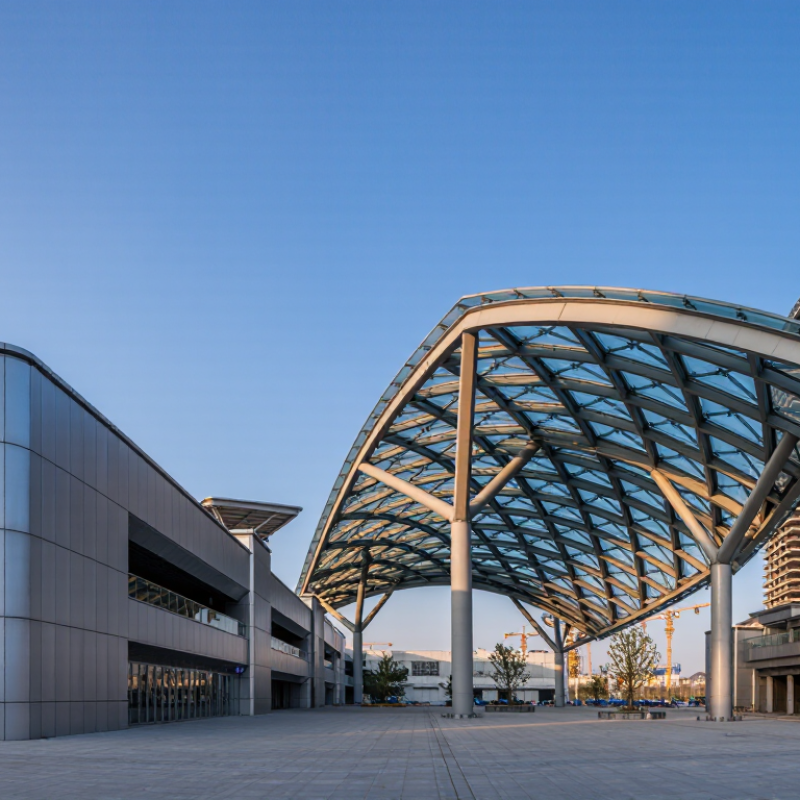
China’s architectural metal structures cover several distinct systems. Structural steel frames support offices, factories, stadiums, and high-rise podiums. Space frames use triangulated steel tubes for wide, column-free roofs. Tensile structures combine steel masts, cables, and coated membranes. They create lightweight entrances, canopies, and transport terminals. Curtain walls use aluminum frames, glass, and insulated panels for weather protection and daylight.
Steel remains central to China’s building supply chain. The World Steel Association reported China’s crude steel output at about 1.005 billion tonnes in 2024. That scale supports extensive plate, tube, coating, and welding capacity. Aluminum systems also matter. International Aluminium Institute data shows China produced more than 40 million tonnes of primary aluminum in 2024. However, production volume does not guarantee project quality. Fabricators still need verified mill certificates, weld inspections, dimensional checks, and documented coating thickness.
In practical projects, engineers often combine systems. A steel truss may carry the roof, while aluminum mullions form the façade. Stainless steel can protect exposed handrails near humid or coastal sites. Galvanized components suit less aggressive environments, but poor drainage can still cause corrosion. The International Building Code and ISO 12944 provide useful reference points, although local requirements must control final decisions. Small errors matter. A misplaced bolt hole can delay installation, and a thin protective coating may fail earlier than expected. Site experience suggests that design tolerances deserve more attention than glossy renderings. That lesson is easy to overlook.
Materials and Manufacturing Processes Used by Chinese Suppliers
What Are the Top Architectural Metal Structures from China?
China’s architectural metalwork commonly includes curtain-wall frames, entrance canopies, space frames, stair systems, railings, and decorative screens. Carbon steel suits long-span roofs and heavy support members. Stainless steel performs well in coastal or high-traffic areas. Aluminum remains useful for lightweight façades and sun-shading panels.
The International Aluminium Institute reported that China produced about 41.7 million tonnes of primary aluminum in 2023, nearly 60% of global output. That scale supports broad material availability, but availability should never replace grade verification.
Chinese suppliers typically combine 3D modeling, CNC laser cutting, robotic welding, press-brake forming, and factory pre-assembly. Hot-dip galvanizing protects exposed carbon steel, while powder coating adds color and surface resistance. Stainless components may receive brushing, polishing, or bead blasting.
The World Steel Association recorded China’s crude steel production at about 1.005 billion tonnes in 2024. This capacity supports competitive structural fabrication, yet quality varies between workshops. That is the uncomfortable part.
A reliable specification should require mill certificates, weld procedure records, coating thickness tests, and dimensional inspection reports.
Salt-spray results alone can mislead. Site drainage, concealed joints, and thermal movement also affect service life. I would inspect mock-ups before approving a large order.
Drawings can look precise. Fabrication can still drift. Independent inspection remains valuable, especially for complex space frames and thin decorative panels.
Key Design, Safety, and Performance Standards
What Are the Top Architectural Metal Structures from China?
Key Design, Safety, and Performance Standards
China’s architectural metal structures range from steel atriums to aluminum façades and long-span canopies. For designers, performance begins with a clear load path, not an attractive profile. Project drawings should identify dead loads, wind pressure, seismic actions, drainage, and thermal movement. In practice, I look for connection details before reviewing surface finishes. That habit prevents expensive surprises.
Safety depends on controlled materials and documented fabrication. Steel grades, bolt classes, weld sizes, and inspection points should appear in the technical specification. Weld procedures may follow ISO 3834, while corrosion protection can reference ISO 12944. For structural steelwork, teams may also use GB 50017 and GB 50205 where applicable. Codes are not interchangeable. Export projects may require additional local standards, calculations, or third-party verification. Independent inspection should confirm dimensions, weld quality, coating thickness, and material traceability.
Durability is often decided by small details. Drainage gaps, sealed joints, and isolated dissimilar metals can prevent hidden corrosion. Fire protection must match the structure’s rating and the building’s evacuation strategy. Coating thickness should be measured, not assumed. A weakness in many specifications is the belief that a thicker section automatically means safer performance. I would challenge that assumption. Poor joints can defeat strong materials. Photographic records, test reports, and controlled site adjustments make the final structure easier to trust.
How to Select a Suitable Chinese Metal Structure Manufacturer
China supplies a wide range of architectural metal structures, including steel staircases, entrance canopies, space frames, railings, and decorative façades. The right manufacturer matters more than the catalogue. A suitable partner should understand design loads, local building codes, welding standards, corrosion risks, and installation conditions.
Request detailed drawings before discussing price. Check steel grades, member sizes, weld locations, connection details, and surface treatments. For coastal projects, hot-dip galvanizing or a tested protective coating may be essential. Ask for mill certificates, welding qualifications, inspection records, and dimensional reports. Factory photographs are useful, but an independent inspection is stronger evidence. A certificate alone is not proof.
Visit the production site when possible. Observe material storage, cutting accuracy, welding practice, and packing methods. Ask how the manufacturer controls tolerances during assembly. Review similar completed projects and speak with previous clients. Clear communication is equally important. Confirm who handles engineering changes, sample approval, shipping documents, and installation guidance. Some suppliers offer attractive prices but provide weak technical support. That mistake becomes expensive later.
Do not judge reliability from fast replies alone. A dependable manufacturer explains risks, admits limitations, and records every revision. Small errors can still appear in complex structures. The key is whether the company detects and corrects them early. Choose a supplier with traceable materials, documented quality procedures, realistic delivery schedules, and practical after-sales support. Your decision should rest on verifiable evidence, not confident promises.
Related Posts
-
Why Are Industrial Metal Structures Essential for Modern Construction?
-
Top 10 Structural Steel Systems in China You Should Know?
-
10 Tips for Choosing Structural Steel Systems
-
China Top Structural Steel Systems Manufacturers
-

What Are Vehicle Protection Systems and How Do They Work?
-
2026 Best Shade Structures for Outdoor Spaces and Protection