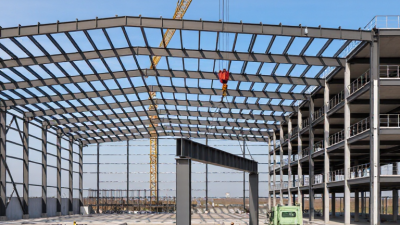
China Top Structural Steel Systems Manufacturers
China has become a significant manufacturing base for Structural steel systems used in warehouses, factories, stadiums, bridges, and commercial buildings. Its leading manufacturers combine engineering design, steel fabrication, surface treatment, and project support under one coordinated process. This integration can reduce delays between drawings and installation.
A reliable manufacturer should demonstrate more than impressive production capacity. Look for documented welding procedures, certified inspectors, material traceability, and clear quality-control records. Factory details also matter. Automated cutting lines, enclosed shot-blasting rooms, and controlled paint areas can improve consistency. Experienced teams check beam dimensions, bolt holes, weld appearance, and coating thickness before dispatch. These checks are practical, not decorative.
Project experience provides another useful measure. A supplier familiar with heavy industrial frames may not excel at long-span architectural structures. Ask for relevant case studies, shop drawings, inspection reports, and delivery evidence. Strong manufacturers explain technical decisions in plain language. They also identify risks early, including foundation tolerances, transport limits, fire protection, and local code requirements. That builds confidence.
No supplier is perfect. Even capable factories may face material changes, port congestion, or communication gaps. This is where dependable coordination matters. A professional partner records revisions, confirms responsibilities, and responds with evidence rather than promises. Buyers should compare lead times, engineering depth, after-sales support, and total project cost, not only the lowest quotation. Some information may remain incomplete during early screening. That deserves careful review.
The best choice depends on project complexity, required standards, budget, and installation conditions. China’s top structural steel manufacturers are not defined by size alone. Their value appears in accurate fabrication, transparent documentation, and structures that perform safely for years.
Structural Steel Systems in China: Types, Grades, and 355 MPa Yield Strength
China’s structural steel systems manufacturers serve factories, warehouses, bridges, and high-rise projects. Common systems include H-beam frames, box columns, portal frames, trusses, and space structures. World Steel Association data reports that China produced about 1.019 billion tonnes of crude steel in 2023. This scale supports broad material availability, but volume does not guarantee consistent fabrication quality.
Structural steel grades are selected according to strength, toughness, welding needs, and thickness. Q355, specified under GB/T 1591-2018, offers a minimum yield strength of 355 MPa for thinner sections. Its actual requirement can decrease as thickness increases. Designers must also check tensile strength, impact performance, chemical composition, and weldability. A 355 MPa label is not enough. Mill certificates, heat numbers, and independent tests should match the delivered members. Site checks often reveal small issues, such as incorrect plate thickness or incomplete weld records. These details can affect load paths and corrosion protection.
Tips: Confirm the design code before comparing manufacturers. Request third-party inspection data, not only brochures. Check section straightness, bolt-hole accuracy, coating thickness, and weld quality. ISO 9001 certification may support process control, but it does not replace project-specific testing. Ask for traceability from raw plate to finished frame. Also review fire protection and transport limits early. A cheaper quotation can become expensive when cutting, repainting, or field correction is required.
Leading Chinese Manufacturers by Fabrication Capacity, Automation, and Quality Control
China Top Structural Steel Systems Manufacturers
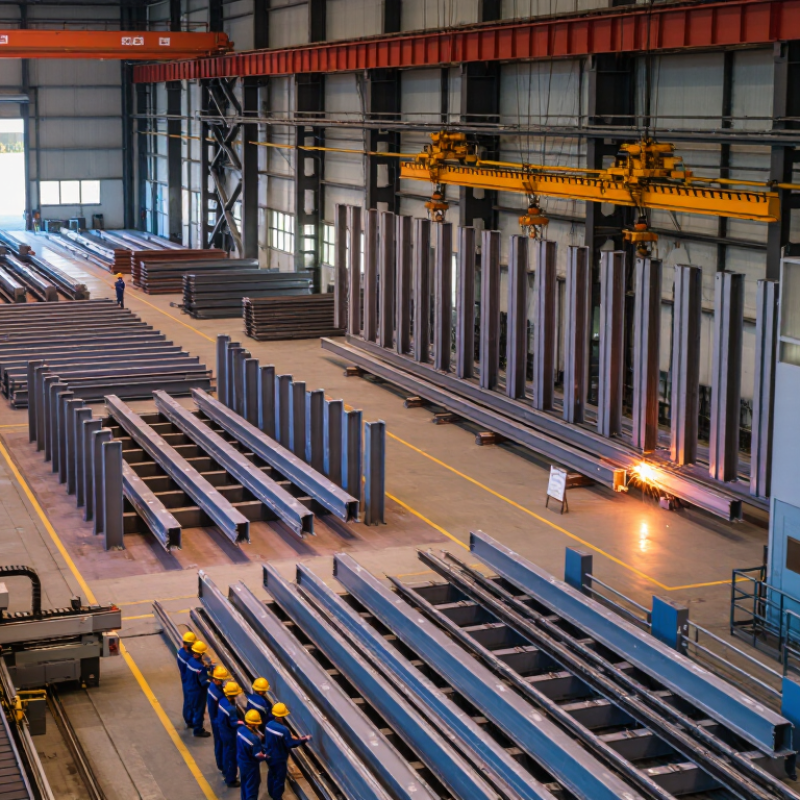
Manufacturing strength is measured beyond workshop size. Leading Chinese structural steel manufacturers combine large fabrication capacity with disciplined production planning. Their facilities may include automated cutting lines, robotic welding cells, shot-blasting chambers, and enclosed painting areas.
Automation improves repeatability. It does not replace engineering judgment. Skilled technicians still check joint fit-up, weld appearance, and dimensional tolerance. Large projects often require separate production zones for columns, trusses, frames, and connection plates. This layout reduces handling time and protects finished surfaces.
Quality control begins with incoming steel inspection. Teams verify material certificates, thickness, grade, and heat numbers before fabrication. Digital tracking can connect each component with drawings, inspection records, and weld reports. Non-destructive testing, including ultrasonic or magnetic particle inspection, supports critical weld evaluation. Small errors matter.
Fabrication capacity can be impressive, but capacity alone may mislead buyers. A crowded schedule can weaken delivery control. Reliable manufacturers therefore show realistic production plans, inspection checkpoints, and packing procedures. They also explain how design changes affect cost and timing. That transparency reflects experience.
No factory is flawless. Equipment downtime, drawing revisions, and rework can still occur.
Strong suppliers record these problems, investigate their causes, and adjust procedures. Buyers should review sample inspection reports, production photographs, and independent audit results before selecting a partner. A clean workshop helps. Verifiable records matter more.
Steel System Manufacturing: CNC Cutting, Welding Accuracy, and ISO 9001 Compliance
Structural steel system manufacturing begins with controlled geometry, not dramatic machinery. CNC plasma or laser cutting converts approved drawings into repeatable plates, beams, and connection parts. Operators still verify kerf width, heat distortion, hole diameter, and edge quality. A small offset can become a difficult site fit-up.
The World Steel Association reported about 1.89 billion tonnes of crude steel production worldwide in 2023. This scale increases pressure on fabricators to reduce rework and material waste. In practice, calibrated CNC equipment, barcode-based part tracking, and documented first-piece inspections create stronger control. Welding accuracy also depends on joint preparation, preheating, welder qualification, and measured distortion. ISO 3834 provides a useful quality framework for fusion welding processes.
ISO’s Survey of Management System Standard Certifications recorded 1,265,216 ISO 9001 certificates across 189 countries and economies in 2022. Certification supports traceability, corrective actions, and process audits, but it does not guarantee perfect structures. That point matters. A certificate cannot repair a poor drawing or rushed inspection. Reliable manufacturers connect ISO 9001 procedures with welding records, mill certificates, dimensional reports, and nonconformance reviews. Some workshops still inspect too late. Earlier checks are usually better. Teams should also question their own tolerances, because “acceptable” on paper may be difficult during assembly.
Performance Standards: GB/T 1591, ASTM A572, and 2-Hour Fire Resistance
China Top Structural Steel Systems Manufacturers
Structural steel system manufacturers are judged by more than cutting accuracy or delivery speed. Their real test is documented performance under recognized standards. GB/T 1591 specifies steel grades, yield strength, impact toughness, and chemical limits. Production teams should verify heat numbers, thickness tolerances, and mill certificates before fabrication. This is practical control, not paperwork. Welding procedures must also match the selected grade and service temperature.
ASTM A572 provides another widely used benchmark for high-strength low-alloy structural steel. Its requirements are not automatically identical to GB/T 1591. Engineers should compare yield strength, tensile strength, chemistry, and notch toughness before approving substitutions. A reliable manufacturer keeps batch records, welding logs, inspection reports, and dimensional data connected to each component. Traceability becomes essential when a column reaches the installation site.
Two-hour fire resistance requires more than selecting thick steel. The complete assembly must be designed and tested for its intended load, exposure, connections, and protection system. Intumescent coatings, board systems, or concrete encasement may be suitable, but their thickness and installation quality need controlled inspection. Accredited laboratory evidence should support the stated rating. A certificate alone is not enough. Field conditions can differ. Open joints, damaged coatings, or unprotected connection plates may reduce actual performance. Some specifications still overlook these details, and that deserves careful review before production begins.
How to Evaluate China’s Top Steel System Suppliers by Cost, Safety, and Delivery
China Top Structural Steel Systems Manufacturers
Evaluating Chinese structural steel suppliers requires more than comparing the lowest quotation. The World Steel Association reported that China produced about 1,005 million tonnes of crude steel in 2024. Large capacity can support competitive pricing, but it does not guarantee accurate fabrication or stable quality. Compare the total landed cost, including steel grades, welding, surface treatment, packing, freight, duties, inspection, and site installation. A cheap quotation can become expensive after rework. I would not pretend that spreadsheets reveal every risk.
Safety needs measurable evidence. The International Labour Organization estimates 2.93 million work-related deaths and 395 million non-fatal injuries globally each year. Ask suppliers for welding procedure qualifications, welder records, non-destructive testing rates, lifting plans, and traceable material certificates. Review how they protect workers around cutting lines, cranes, and coating areas. Factory photographs help, but an independent audit is stronger. Paperwork alone is not enough.
Tips: Request one sample connection, not only drawings. Check bolt holes, weld profiles, coating thickness, and dimensional tolerances. For delivery, use a milestone schedule covering design approval, procurement, fabrication, inspection, packing, and port loading. UNCTAD reports that maritime shipping carries over 80% of global merchandise trade by volume, so vessel delays can affect construction dates. Confirm buffer time, export documents, packaging standards, and a realistic remedy for late delivery. Ten extra days may protect the whole project.
China Top Structural Steel Systems Manufacturers - How to Evaluate China’s Top Steel System Suppliers by Cost, Safety, and Delivery
| Anonymous Supplier Profile | Typical Steel System | Indicative Fabrication Cost (USD/metric ton) |
Typical Production Lead Time | Minimum Order Flexibility | Safety and Quality Evidence to Request | Cost Score (1–5) |
Safety Score (1–5) |
Delivery Score (1–5) |
Best Use Case |
|---|---|---|---|---|---|---|---|---|---|
| Profile A: High-Volume Fabricator | Standard portal frames, warehouses, logistics buildings | 800–1,150 | 6–10 weeks after approved drawings | Medium to high | Welding procedure specifications, welder qualifications, mill certificates, dimensional inspection reports, coating reports, and third-party inspection access | 5 | 4 | 5 | Cost-sensitive industrial and commercial projects with repetitive components |
| Profile B: Export-Oriented Engineering Fabricator | Complex building frames, multi-bay industrial structures, customized steel systems | 950–1,450 | 8–14 weeks after approved drawings | Medium | ISO 9001 quality procedures, ISO 3834 welding controls or equivalent, traceable heat numbers, inspection and test plans, non-destructive testing records, and packing lists | 4 | 5 | 4 | International projects requiring traceability, engineering coordination, and export documentation |
| Profile C: Modular and Prefabricated System Supplier | Modular rooms, containerized units, prefabricated steel modules | 1,100–1,800 | 8–16 weeks after design approval | Low to medium | Load calculations, lifting-point design, fire-resistance documentation where applicable, electrical and mechanical inspection records, and factory acceptance testing | 3 | 4 | 4 | Remote sites, temporary facilities, worker accommodation, and fast-installation projects |
| Profile D: Heavy Structural Steel Specialist | Heavy columns, transfer beams, industrial platforms, high-load structures | 1,100–1,700 | 10–18 weeks after approved drawings | Medium | Approved welding procedures, ultrasonic or magnetic-particle testing where specified, material traceability, dimensional surveys, heavy-lift plans, and load-bearing connection inspection | 3 | 5 | 3 | Power, mining, manufacturing, and other projects with high structural loads |
| Profile E: Fast-Track Commercial Fabricator | Light commercial frames, canopies, mezzanines, and standard steel components | 900–1,300 | 4–8 weeks after approved drawings | High | Shop drawings, material certificates, weld visual inspection, bolt certificates, coating thickness records, and documented final inspection | 4 | 4 | 5 | Small and medium projects where short production time and order flexibility are priorities |
| Profile F: Premium Compliance-Focused Supplier | Engineered steel systems requiring strict international specifications | 1,300–2,000 | 10–20 weeks after approved drawings | Low to medium | Project-specific quality plan, independent inspection, complete material traceability, qualified welding personnel, NDT reports, coating system approval, and formal non-conformance control | 2 | 5 | 3 | Projects with demanding code compliance, inspection requirements, and strict documentation standards |
Related Posts
-
10 Tips for Choosing Structural Steel Systems
-

China Top Steel Structures Innovations for Modern Architecture?
-
Top 10 Structural Steel Systems in China You Should Know?
-

10 Essential Tips for Designing Cold Formed Steel Buildings
-

How to Choose the Best Vehicle Protection Systems
-

10 Best Shade Structures for Your Outdoor Space?