What Are the 10 Best Metal Carports for Global Buyers?
Metal carports are no longer simple shelters for occasional parking. They support vehicles, equipment, small businesses, and rural storage across many climates. Buyers now compare steel thickness, roof geometry, corrosion protection, anchoring, installation speed, and long-term maintenance.
Industry data supports this wider interest. Grand View Research’s Prefabricated Buildings Market Report 2024–2030 identifies continued demand for factory-made structures because they can reduce construction time and improve material consistency. The Freedonia Group’s World Prefabricated Housing study also highlights modular manufacturing and transport efficiency as important market drivers. These reports do not isolate Metal carports, however. That limitation matters.
Building-science expert Joseph Lstiburek, founder of Building Science Corporation, states, “Water is the enemy of buildings.” His warning applies directly to carports. Poor drainage, exposed fasteners, and weak flashing can turn a clean galvanized frame into a rusting problem. Quickly.
This guide evaluates the 10 best Metal carports for global buyers using practical criteria. These include structural design, regional weather suitability, steel quality, coating systems, supplier experience, installation clarity, warranty terms, and replacement-part access. Wind and snow ratings require careful verification. A product suitable for Arizona may fail in coastal Norway or tropical Southeast Asia.
No ranking is perfect. Product availability changes, and local engineering requirements can alter the final choice. Still, field experience, manufacturer documentation, and independent industry evidence provide a stronger starting point than attractive photographs alone.
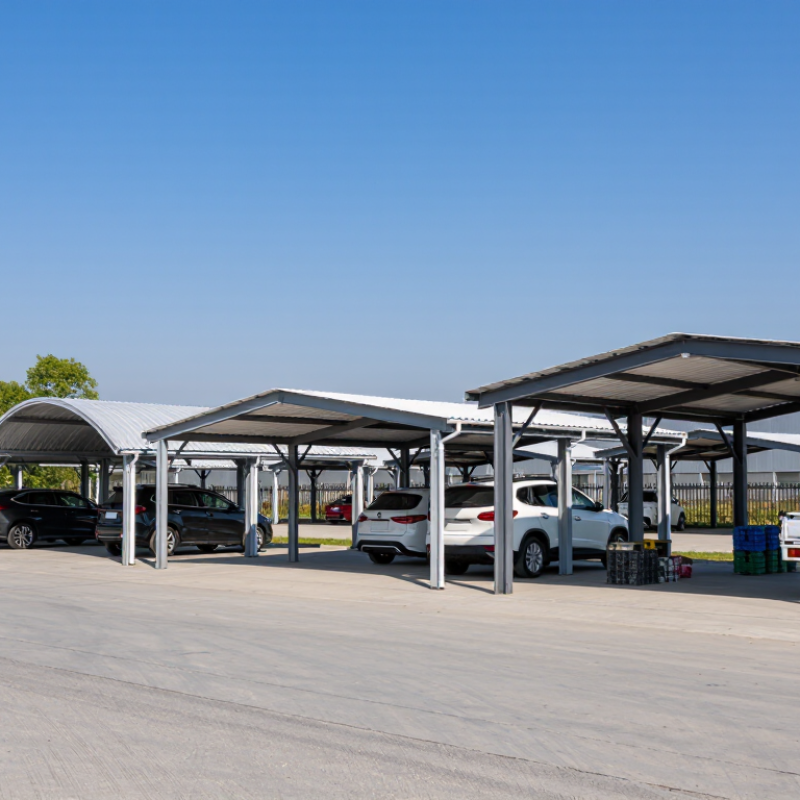
Global Metal Carport Selection Criteria: Steel, Loads, Codes, and Warranty
What Are the 10 Best Metal Carports for Global Buyers?
The best metal carport depends on climate, vehicle size, and local construction rules. A coastal buyer should prioritize galvanized or properly coated steel, because salt air accelerates corrosion. In snowy regions, ask for a documented roof-load rating, not a vague “heavy-duty” claim. Wind zones and seismic conditions also affect posts, anchors, and roof geometry. Small details matter. A 20-centimeter anchor mistake can weaken an otherwise strong structure.
Steel thickness deserves careful attention. Thicker framing usually improves strength, but engineering design matters more than one gauge number. Request stamped calculations or certified drawings when local authorities require them. Check whether the stated load includes snow, wind uplift, and the carport’s own weight. The foundation must match the soil and frame loads. A concrete slab that looks level may still lack enough depth or reinforcement.
Warranty terms reveal reliability. Read coverage for rust, paint failure, fasteners, leaks, and structural damage separately. Ask who handles claims across borders and whether labor is included. Installation instructions should show anchor spacing, torque requirements, and drainage details. A clean product sheet is not proof. Even careful comparisons can miss local permit requirements or unusual soil movement. That is where an independent engineer earns the fee, especially before ordering a large structure overseas.
| Rank | Recommended Carport Type | Typical Vehicle Use | Recommended Clear Size | Roof Form | Primary Steel Specification | Corrosion Protection | Suggested Design Snow Load | Suggested Design Wind Basis | Suitable Code Frameworks | Foundation and Anchoring | Recommended Minimum Warranty Requirement | Best Selection Advantage |
|---|---|---|---|---|---|---|---|---|---|---|---|---|
| 1 | Standard Single-Car Gable Carport | One passenger car, crossover, or small van | 3.0 × 5.5 m (9.8 × 18.0 ft) |
Gable roof with ridge ventilation and moderate eaves | Hot-formed or cold-formed structural steel; S350GD or equivalent minimum yield strength of approximately 350 MPa for primary members | Hot-dip galvanized sheet and framing; specify ASTM A653 G90, EN 10346 Z275, or an equivalent coating system | 1.0–2.0 kPa, subject to local snow and drift calculations | Basic or ultimate wind speed to be calculated from the local code; commonly screened within 30–45 m/s | IBC with ASCE 7, Eurocodes including EN 1991, NBCC, AS/NZS 1170, or the applicable national standard | Reinforced concrete pads or slab with engineered post anchors; verify uplift, shear, frost depth, and edge distance | Minimum 10 years against perforation corrosion and 2 years against workmanship defects | Balanced cost, simple installation, and broad compatibility with residential planning requirements |
| 2 | Wide Double-Car Cantilever Carport | Two cars parked side by side with unobstructed access | 6.0 × 5.5 m (19.7 × 18.0 ft) |
Single-slope or asymmetric cantilever roof | Structural hollow sections or built-up steel with a design yield strength of 275–355 MPa; members should be checked for deflection and torsion | Hot-dip galvanizing or a zinc-rich primer plus durable exterior coating; seal cut edges after fabrication | 1.0–1.5 kPa in moderate snow regions; higher values require structural redesign | Wind pressure and uplift calculated for the exposed roof edge; avoid using residential low-wind assumptions without verification | ASCE 7, EN 1991-1-4, AS/NZS 1170.2, or the governing local wind standard | Continuous reinforced-concrete strip footing or engineered individual footings with moment-resistant anchors | Minimum 10 years against corrosion and 2 years against installation or manufacturing defects | Provides large, column-free parking space and convenient door-opening clearance |
| 3 | Heavy-Snow Reinforced Carport | Passenger vehicles in cold, mountainous, or high-altitude regions | 3.2 × 6.0 m (10.5 × 19.7 ft) |
Steep gable roof, normally 25–35 degrees, with controlled snow shedding | Engineered structural steel with primary members commonly specified at 350 MPa yield strength or higher; verify member buckling and connection capacity | Hot-dip galvanized steel conforming to ISO 1461 for fabricated components or an equivalent project specification | 2.5–5.0 kPa, including applicable exposure, thermal, unbalanced, and snow-drift effects | Local code wind load with combined snow and wind load cases; roof shape factors must be included | EN 1991-1-3, ASCE 7, NBCC, or the applicable national snow-load standard | Below-frost-depth concrete foundations with positive mechanical anchoring and verified uplift resistance | Minimum 15 years against corrosion and 3 years against structural or workmanship defects | Designed for higher roof loading and reduced risk of excessive deflection under snow accumulation |
| 4 | High-Wind and Cyclone-Resistant Carport | Vehicles in coastal, typhoon, hurricane, or cyclone-prone areas | 3.0 × 6.0 m (9.8 × 19.7 ft) |
Low-profile hip or gable roof with reinforced eaves and minimal roof overhang | Engineered steel frame with continuous load paths, reinforced bracing, and structural members selected for local pressure and suction zones | Hot-dip galvanized framing with corrosion-resistant fasteners; use compatible washers and isolate dissimilar metals | Project-specific; snow loads must be checked separately where applicable | Site-specific regional wind speed and pressure calculation, often requiring design for 45–60 m/s or more in severe regions | ASCE 7, EN 1991-1-4, AS/NZS 1170.2, ISO-based national codes, or local cyclone provisions | Engineered reinforced-concrete footings, embedded anchors, hold-downs, and verified overturning resistance | Minimum 15 years against corrosion and 5 years against structural workmanship defects | Prioritizes roof uplift resistance, connection strength, bracing, and foundation anchorage |
| 5 | RV and Motorhome Tall Carport | Recreational vehicles, motorhomes, caravans, and tall commercial vans | 4.0 × 8.0 m (13.1 × 26.2 ft) |
High-clearance gable or single-slope roof | Structural steel columns and rafters designed for increased height, larger spans, and vehicle impact exposure; minimum 275–350 MPa yield strength is commonly suitable after engineering review | Hot-dip galvanized frame with UV-stable roof coating and sealed drainage details | 1.0–3.0 kPa depending on location, roof geometry, and accumulation risk | Wind design must account for increased wall area and roof height; use the governing local standard | IBC, ASCE 7, Eurocodes, NBCC, AS/NZS 1170, or the applicable building regulations | Engineered slab or isolated footings; provide vehicle clearance, drainage slope, and protection against reversing impacts | Minimum 10 years against corrosion and 2 years against workmanship defects | Accommodates taller vehicles while allowing maintenance access and roof-mounted equipment clearance |
| 6 | Coastal and Marine-Climate Carport | Vehicles near saltwater, humid coastlines, or high-salinity environments | 3.0 × 5.5 m (9.8 × 18.0 ft) |
Open gable roof with generous drainage and limited water-trap details | Structural steel selected for the exposure category; avoid unprotected bare steel and specify compatible stainless or coated fasteners | Hot-dip galvanizing with a duplex paint or powder-coating system where required; repair damaged coating according to the coating specification | Local snow load, if applicable; coastal exposure does not replace snow-load calculations | Local wind pressure and uplift calculations with enhanced exposure assumptions for open terrain or shorelines | ISO 12944 exposure classification, ISO 1461, ASCE 7, EN 1991, or local corrosion and structural standards | Raised concrete foundations, drainage away from posts, sealed base details, and galvanically compatible anchors | Minimum 15 years against perforation corrosion and 3 years against coating or workmanship defects | Improves durability by addressing salt contamination, crevice corrosion, drainage, and coating compatibility |
| 7 | Solar-Ready Metal Carport | Residential, workplace, or commercial parking with future photovoltaic panels | 6.0 × 6.0 m (19.7 × 19.7 ft) |
Single-slope roof with panel-friendly orientation and planned cable routes | Structural steel frame designed for the additional dead load, wind uplift, maintenance loads, and point loads from the solar mounting system | Hot-dip galvanized steel with UV-resistant roof finish and sealed penetrations | 1.0–2.5 kPa, plus the weight and installation loads of the selected photovoltaic system | Wind pressures calculated for both the carport roof and the elevated solar array, including edge and corner zones | ASCE 7, EN 1991, AS/NZS 1170, IEC 62548 for photovoltaic array design, and local electrical regulations | Engineered footings sized for combined frame and solar-array uplift; provide bonding and grounding provisions | Minimum 15 years against corrosion and 5 years against structural workmanship defects | Allows renewable-energy installation without requiring a separate support structure |
| 8 | Modular Multi-Bay Parking Carport | Apartment complexes, workplaces, retail sites, and public parking areas | Each bay approximately 2.7–3.0 × 5.0–5.5 m Expandable in modules |
Repeated gable, mono-pitch, or portal-frame roof modules | Standardized galvanized structural sections with engineered splice plates, bracing, and bay-to-bay load transfer | 1.0–3.0 kPa, calculated for the complete site layout and snow-drift zones | Site-specific wind pressures based on building importance, terrain, shielding, and open-sided configuration | IBC, ASCE 7, Eurocodes, NBCC, AS/NZS 1170, and local commercial permitting requirements | Reinforced strip footings, ground beams, or individual footings designed for repetitive column reactions | Minimum 15 years against corrosion and 3–5 years against structural workmanship defects | Scales efficiently and simplifies replacement, extension, parking layout, and maintenance planning | |
| 9 | Low-Cost Flat-Pack Residential Carport | Temporary or budget-conscious single-vehicle protection | 2.8 × 5.2 m (9.2 × 17.1 ft) |
Light single-slope roof with prefabricated bolted panels | Cold-formed galvanized steel sections; verify minimum thickness, yield strength, connection capacity, and stated span before purchase | Factory-applied zinc coating, preferably with a documented coating mass such as Z275 or G90 equivalent | Usually limited to approximately 0.75–1.5 kPa unless specifically engineered for more | Suitable only where local wind and uplift calculations confirm the kit capacity; temporary use does not remove safety obligations | Local residential code, manufacturer engineering documentation, and applicable wind and snow standards | Concrete slab or engineered ground anchors; do not rely on loose soil stakes in high-wind locations | Minimum 5–10 years against perforation corrosion and at least 1 year against workmanship defects | Fast delivery, compact shipping, and straightforward assembly when site loads are moderate |
| 10 | Commercial Fleet and Utility-Vehicle Carport | Pickup trucks, service vehicles, light trucks, and fleet storage | 6.0 × 10.0 m or larger (19.7 × 32.8 ft or larger) |
Portal-frame or multi-span roof with high durability and service clearance | Engineered hot-rolled or cold-formed structural steel; primary members commonly use S355 or an equivalent 350 MPa-class steel where required by design | Hot-dip galvanizing or a specified industrial coating system; include impact-resistant post protection | 1.5–3.5 kPa, with site-specific drift, maintenance, and equipment loads | Commercial or industrial wind design based on occupancy, exposure, importance category, and local code requirements | IBC, ASCE 7, Eurocodes, NBCC, AS/NZS 1170, and local commercial or industrial permitting standards | Reinforced concrete foundations with vehicle-impact barriers, drainage design, and engineered anchor bolts | Minimum 15–20 years against corrosion and 5 years against structural workmanship defects | Offers greater durability, clearance, impact protection, and lifecycle value for intensive daily use |
Related Posts
-
What Are the Best Solar Carports in China?
-
Why Choose Professional Carport Installation?
-
2026 Best Shade Structures for Outdoor Spaces and Protection
-
Best Custom Carports for Your Needs in China 2026?
-
What Are the Top Carport Manufacturing Types?
-
Top 7 Best Parking Lot Coverage Solutions for Optimal Space Utilization?

