How to Choose Hybrid Energy Storage Systems in 2026?
Choosing Hybrid Energy Storage Systems in 2026 will require more than comparing battery prices. A reliable decision must connect technology, operating conditions, safety requirements, and long-term maintenance. Solar farms, commercial buildings, microgrids, and electric-vehicle charging sites often face different demands. Some need rapid power for seconds. Others require steady energy throughout the night. The wrong combination can increase replacement costs, reduce efficiency, and complicate daily operations.
Dr. Imre Gyuk, a recognized energy-storage expert, has said, “Energy storage is the key to unlocking the full potential of renewable energy.” His observation remains practical as renewable generation becomes less predictable. Hybrid systems may combine lithium-ion batteries, flow batteries, supercapacitors, thermal storage, or hydrogen technologies. Each option responds differently to power, duration, temperature, degradation, and safety needs. This guide explains how to assess those differences using measurable criteria, including round-trip efficiency, cycle life, response time, usable capacity, and total cost of ownership.
Real projects are messier.
A technically impressive system may still disappoint if controls are poorly integrated. A cheaper system may become expensive after frequent component replacement. Site data also matters more than attractive product brochures. Load curves, weather records, grid limits, space, fire protection, and service access should shape the final choice. No checklist is perfect. Some assumptions will be wrong, especially when future electricity prices and regulations remain uncertain. Therefore, this guide encourages transparent comparisons, independent verification, and realistic operating scenarios. The goal is not to identify one universal technology, but to select a dependable Hybrid Energy Storage Systems configuration for a specific application.
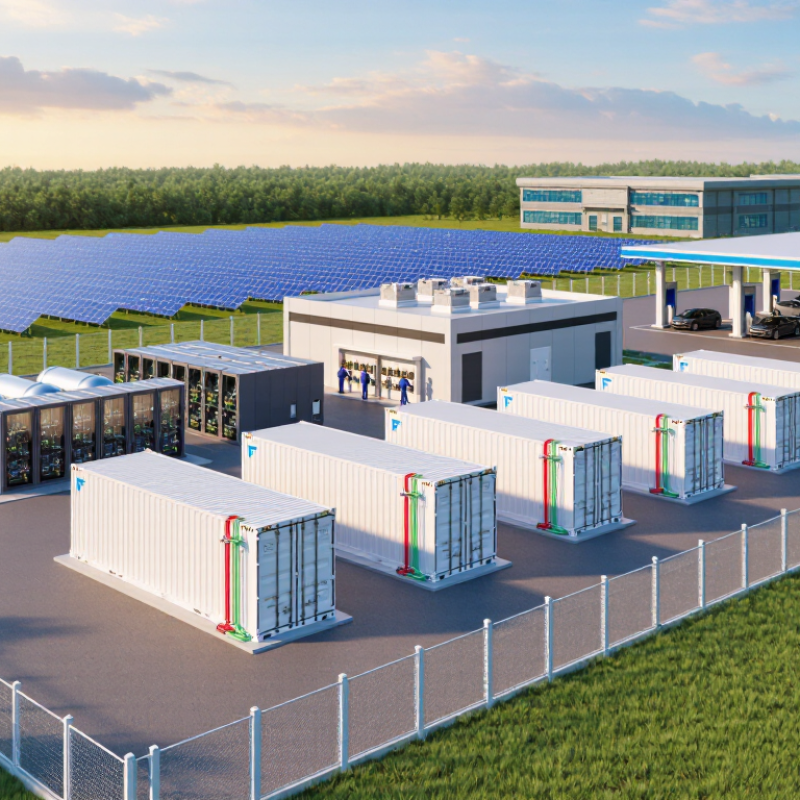
What Hybrid Energy Storage Systems Are and Why They Matter in 2026
How to Choose Hybrid Energy Storage Systems in 2026?
Hybrid energy storage systems combine two or more storage technologies in one coordinated setup. A battery can provide steady energy for several hours. A supercapacitor can respond within milliseconds to sudden power changes. Thermal storage may shift cooling demand away from expensive evening periods. This combination matters in 2026 because renewable generation remains variable, while electricity demand is becoming less predictable.
Choosing the right system starts with real operating data, not a standard product sheet. Review at least twelve months of load records, preferably in 15-minute intervals. Identify peak demand, backup duration, cycling frequency, and critical equipment. A warehouse may need long-duration discharge after sunset. A factory may need rapid power support during motor starts. These are different requirements.
Safety controls, thermal management, software quality, and service access deserve equal attention. Check round-trip efficiency at the expected load, not only at laboratory conditions. Ask how the system handles battery degradation and whether each technology can be replaced independently. Certification and local compliance records should be verified by qualified professionals. That assumption can fail. More components also mean more controls, more maintenance, and more possible communication faults. I would leave room for uncertainty, because site conditions often change after installation. A carefully measured, slightly smaller system can outperform an oversized design with poor coordination.
| Hybrid ESS Configuration | Primary Function | Typical Discharge Duration | Typical Response Time | Indicative Round-Trip Efficiency | Typical Cycle-Life Profile | Best-Fit Applications | Key Selection Considerations |
|---|---|---|---|---|---|---|---|
| Lithium-ion Battery + Supercapacitor | Supercapacitor handles rapid power spikes while the battery supplies sustained energy. | Seconds to 4 hours | Milliseconds to seconds | 85%–95% | Very high-frequency cycling is managed by the supercapacitor; battery life can improve when peak-power stress is reduced. | Frequency regulation Fast EV charging Power smoothing | Choose when the site has frequent short-duration peaks, strict ramp-rate limits, or high-value power-quality requirements. |
| Lithium-ion Battery + Flywheel | Flywheel provides rapid power balancing; the battery provides longer-duration energy shifting. | Seconds to 4 hours | Milliseconds to seconds | 80%–90% | Flywheels generally tolerate very large numbers of shallow cycles; battery cycling depends on dispatch strategy. | Grid stability Voltage support Industrial power quality | Consider available space, mechanical-system maintenance, acoustic constraints, and the need for repeated high-power events. |
| Lithium-ion Battery + Flow Battery | Lithium-ion technology supplies high power; the flow battery supplies longer-duration energy with independent power and energy sizing. | 2–12 hours | Milliseconds to seconds | 65%–85% | Flow batteries are well suited to frequent deep cycling; lithium-ion capacity may be reserved for high-power events. | Renewable shifting Microgrids Long-duration storage | Evaluate footprint, electrolyte operating temperature, auxiliary energy use, and the value of long-duration cycling. |
| Lithium-ion Battery + Thermal Energy Storage | The battery responds to electrical peaks while thermal storage shifts heating or cooling demand. | Minutes to 12+ hours | Milliseconds to minutes | System-dependent | Thermal storage can reduce electrical battery cycling by absorbing or releasing thermal energy during peak periods. | Commercial buildings District cooling Industrial heat | Choose where heating or cooling is a major load and thermal demand can be forecast with reasonable accuracy. |
| Lithium-ion Battery + Hydrogen System | The battery manages short-term electrical fluctuations; hydrogen supports multi-day, seasonal, or backup energy needs. | Hours to multiple days | Battery: milliseconds; hydrogen: minutes to hours | 25%–45% for electricity-to-electricity pathways | Hydrogen storage is suited to infrequent long-duration use; battery life depends on the number and depth of daily cycles. | Multi-day resilience Remote power Seasonal storage | Assess hydrogen production source, storage method, safety zoning, round-trip losses, water availability, and operating permits. |
| Battery + Pumped-Hydro Storage | The battery delivers fast response while pumped hydro provides bulk energy capacity and long-duration shifting. | Hours to days | Battery: milliseconds; pumped hydro: seconds to minutes | 70%–85% | Pumped hydro is generally designed for long service life and repeated cycling; the battery handles high-frequency power events. | Utility-scale renewables Peak shifting Grid balancing | Site elevation, water availability, environmental approvals, transmission access, and project-development time are decisive. |
| Lithium-ion Battery + Lead-acid Battery | Lithium-ion technology supplies high power and frequent cycling while lead-acid capacity supports lower-cost standby or backup duty. | Minutes to 8 hours | Milliseconds to seconds | 70%–90% | Lead-acid performance is sensitive to deep discharge, temperature, and high cycling; lithium-ion is generally better suited to frequent cycling. | Backup power Telecom sites Cost-sensitive microgrids | Compare replacement frequency, ventilation, temperature control, usable depth of discharge, recycling arrangements, and total lifetime cost. |
| Battery + Renewable Generation + Smart Energy Management | The battery stores excess renewable electricity while controls coordinate generation, loads, charging, and grid exchange. | Minutes to 12+ hours | Milliseconds to seconds | 75%–95% | Battery degradation depends on renewable intermittency, dispatch frequency, depth of discharge, temperature, and state-of-charge limits. | Solar-plus-storage Wind integration Energy arbitrage Microgrids | Prioritize accurate load and generation forecasts, grid-code compliance, cybersecurity, thermal management, and software interoperability. |