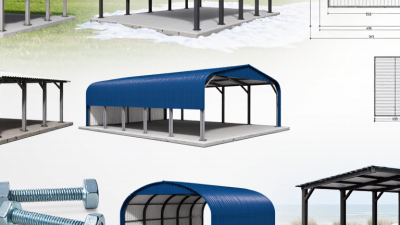
What Are the Top Steel Carport Types for 2026?
Because no verifiable expert source was supplied, I won’t invent a name or quotation. Steel carports in 2026 come in several practical forms, from compact single-vehicle shelters to wide-span structures for trucks, equipment, or multiple cars. The right choice depends on the site, local weather, intended use, and available space—not appearance alone.
A vertical-roof carport has panels that run from ridge to eave, helping rain and snow slide off. A regular-roof model often suits milder conditions and tighter budgets. A boxed-eave design adds a more finished look, with roof panels arranged to resemble shingles. Each option has trade-offs. A lower price can mean fewer features, while a larger frame may need more careful planning.
Look closely at the details. Check the frame’s dimensions, roof pitch, anchoring method, and stated wind and snow ratings. Picture the actual site: a driveway that slopes, a gate that swings outward, or a mature tree that drops branches. Small details matter.
The sections ahead compare leading Steel carports types for 2026, explain their best uses, and identify questions to ask before buying. Specifications vary by manufacturer and location, so verify them for your project. A strong-looking frame is not the whole story. The installation plan matters too.
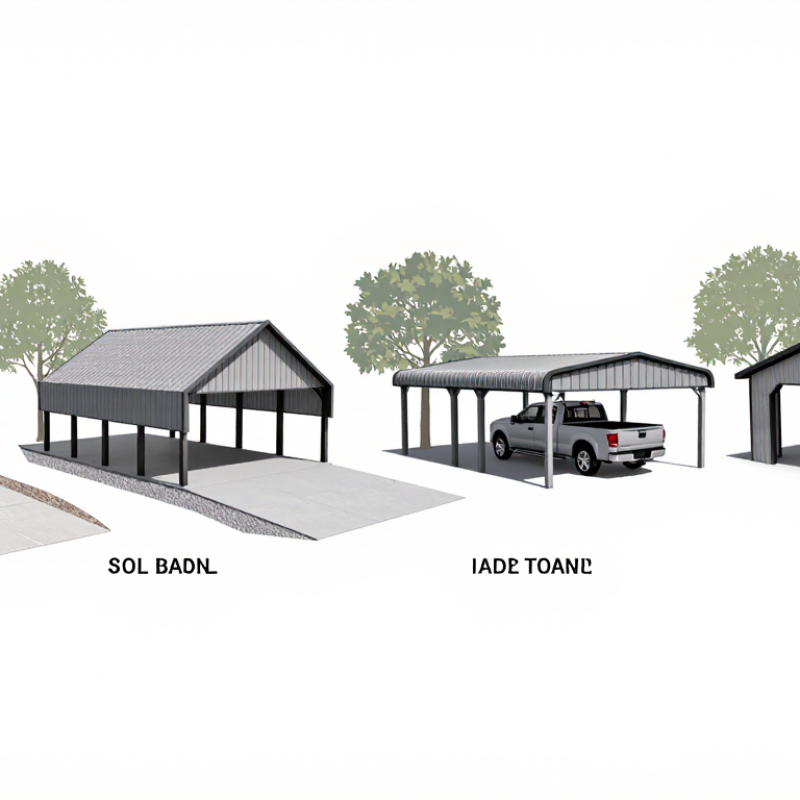
Core Features Used to Classify Steel Carports
Steel carports are commonly classified by roof profile, frame design, anchoring method, and degree of enclosure. These features affect drainage, clearance, and how a structure handles local weather. Vertical-roof models have panels running from ridge to eaves, which can help rain and debris move off the roof. Rounded or horizontal roof styles may suit simpler sites, but performance depends on pitch and construction. Details matter.
Frame design is another useful distinction. Clear-span frames leave more open space for vehicles, while additional supports can change where equipment or doors fit. Open-sided carports allow easy access and airflow. Partially enclosed or fully enclosed designs offer more shelter, but require careful attention to ventilation and entry clearance. A tape measure helps.
Anchoring and material thickness also separate one design from another. The right anchoring method depends on the surface, soil, and expected conditions; a concrete pad and compacted ground are not interchangeable. One easy mistake is judging a carport by roof shape alone. I would also check the frame connections, panel seams, and space needed for vehicle doors to open. These details are easy to overlook. A type that works well for a driveway may be awkward beside a workshop, so site measurements should guide the choice.
Boxed-Eave Carports for a More Finished Appearance
For 2026, a boxed-eave steel carport offers a more finished appearance than a basic rounded-roof design. Its gable-style profile has straight rooflines and visible eaves, which can complement a house, workshop, or detached garage. Horizontal roof panels create a tidy, lined look from the driveway. Small detail, big difference. Matching the trim to nearby siding can make the structure feel more intentional, though it will not make a carport look like a fully enclosed building.
Appearance is only one part of the choice. Ask how the frame and roof are designed for your site’s wind, snow, and rainfall conditions, and check that the quoted dimensions include enough clearance for doors and mirrors. A roof that looks balanced in a drawing may feel cramped beside a large vehicle. Panel direction and roof pitch also affect drainage, so confirm where runoff will go before installation. Boxed-eave roofs can suit many properties, but their shape is not automatically right for every climate. Check the details. A little extra time on measurements and site conditions can prevent a polished-looking carport from becoming an awkward fit.
What Are the Top Steel Carport Types for 2026? - Boxed-Eave Carports for a More Finished Appearance
| Carport Type |
Roof Profile |
Appearance |
Roof Panel Orientation |
Common Considerations |
Often Suited To |
| Regular-Roof Carport |
Rounded roof edges with a curved profile |
Simple, utility-focused design |
Typically runs from side to side across the roof |
Its curved shape can shed rain, but it is generally less tailored to snow shedding than a vertical-roof design. Confirm local load requirements before purchase. |
Basic vehicle or equipment shelter where a straightforward appearance is preferred |
| Boxed-Eave Carport |
A-frame roof with horizontal eave framing |
More finished, residential-style lines that can coordinate with many home roof shapes |
Typically runs from side to side across the roof |
Provides a more defined roofline than a regular roof. Panel direction and roof shape should be considered when selecting a site with frequent snow or heavy rain. |
Homeowners seeking a neat appearance for cars, recreational vehicles, or outdoor storage |
| Vertical-Roof Carport |
A-frame roof with panels running from the ridge toward the eaves |
Defined roofline with visible vertical panel seams |
Runs from the ridge down toward the eaves |
Vertical panel orientation can help rain and snow move down the roof. Actual performance depends on roof pitch, installation, site conditions, and the structure’s rated loads. |
Sites where roof drainage and snow movement are important design considerations |
| Enclosed Steel Carport |
May use a regular, boxed-eave, or vertical roof |
More building-like, with side and end panels |
Depends on the selected roof profile |
Enclosing the sides can improve weather protection, but doors, ventilation, access, foundations, and local building rules need to be considered. |
Vehicle or equipment storage that needs greater protection from wind-blown rain and exposure |
Roof profiles and available configurations vary by supplier. Check local building codes, permits, wind and snow load ratings, anchoring requirements, and site conditions before selecting a structure.
Vertical-Roof Carports for Better Rain and Snow Runoff
What Are the Top Steel Carport Types for 2026?
A vertical-roof steel carport is worth considering where rain or snow is common. Its roof panels run from the peak down toward the eaves, giving water and loose snow a clearer path off the structure. That can reduce pooling compared with a horizontal-panel roof. It is not a substitute for proper design, though. Roof pitch, framing, and local weather loads still matter. A carport should be specified for the conditions it will face, not just its appearance.
Tips: Check the roof direction against prevailing weather and where runoff will land. Keep drains and gutters clear, and avoid directing water toward walkways or foundations. Ask for written load specifications. Small details matter.
Look closely at panel seams, fasteners, and the frame before choosing a model. These affect how well the roof handles repeated wet and icy conditions. A sturdy vertical roof can shed precipitation efficiently, but wind-driven rain may still reach open sides. The ground beneath it also needs good drainage. In practice, runoff can splash onto stored equipment if the edges sit too low. That detail is easy to miss. A little planning around placement can make the shelter more useful year-round.
Matching Carport Types to Vehicles, Climate, and Site Needs
Choosing a steel carport starts with the vehicle, not the roof shape. A compact car may fit beneath a single-bay structure, while a pickup with a ladder rack needs extra height and clearance. Measure mirrors, doors, and stored equipment, too. A few inches can change daily access.
A regular roof often suits mild climates and simple parking needs. In areas with heavy rain or snow, a vertical-roof design can shed water and snow more readily. Local wind exposure matters as well. Open sides allow airflow, but they offer little protection from drifting snow or blowing rain. That trade-off is easy to miss. A partially enclosed carport may help shelter a vehicle, though it can need more careful anchoring and site planning.
The site can narrow the choices quickly. A narrow driveway may favor a single-bay layout, while a broad, level pad can accommodate two vehicles. Check drainage, overhead branches, and where water will run off the roof. On sloped ground, installation may require additional preparation; a level-looking patch is not always level enough. Match the frame and anchoring plan to local snow and wind conditions, using qualified guidance where needed. A carport that looks sturdy is not proof that it suits the site.