What Are the Top Entrance Front Door Types in 2026?
Choosing an Entrance Front Door in 2026 means balancing appearance with everyday performance. The right style should complement your home, withstand local weather, and feel secure in daily use. A striking finish matters, but so do insulation, durable hardware, and a well-fitted frame. Small details count.
This guide explores leading options, from classic wood and low-maintenance fiberglass to sturdy steel, glazed designs, and contemporary pivot doors. Each type brings trade-offs. Wood offers warmth and character, yet may need regular care. Fiberglass can imitate wood grain, though the quality of the finish varies. Steel provides a solid feel, but dents and surface damage deserve attention. Glass panels can brighten a dim entry, provided privacy and suitable glazing remain part of the decision.
There is no single best door for every home. A coastal property, a shaded townhouse, and a busy family entrance face different demands. Product ratings and installation details can also differ, so compare manufacturer specifications rather than relying on appearance alone. Even a premium door may disappoint if it is poorly installed. That part is easy to overlook. The following overview will help you weigh design, materials, security features, and maintenance before choosing a door that fits both your home and your routine.
How Entrance Front Doors Are Classified
Entrance front doors are classified by material, operation, glazing, and tested performance. Material categories include wood, steel, fiberglass, and aluminum-framed glass. Each responds differently to rain, sun, dents, and maintenance.
A painted wood door can suit a sheltered porch, while a steel slab may need careful protection at scratched edges. There is no perfect material.
Operation is another useful distinction. Hinged doors swing inward or outward; pivot doors rotate on offset hardware, and sliding systems move along a track. Construction may be solid, partially glazed, or mostly glass.
That last category changes daylight and privacy, so check where the clear panels sit before choosing. Small detail, big effect.
Performance ratings separate appearance from tested capability. The AAMA/WDMA/CSA 101/I.S.2/A440-22 North American Fenestration Standard uses design-pressure grades such as PG 15 and PG 50, corresponding to 15 and 50 pounds per square foot.
These figures describe pressure resistance, not a universal quality score; local exposure and installation still matter. For energy comparisons, the National Fenestration Rating Council’s ratings report whole-product U-factor and solar heat gain coefficient.
Compare the complete door assembly, including glazing and frame, rather than relying on the slab’s material alone. Labels can feel technical. They are worth reading.
The Main Front Door Types Available in 2026
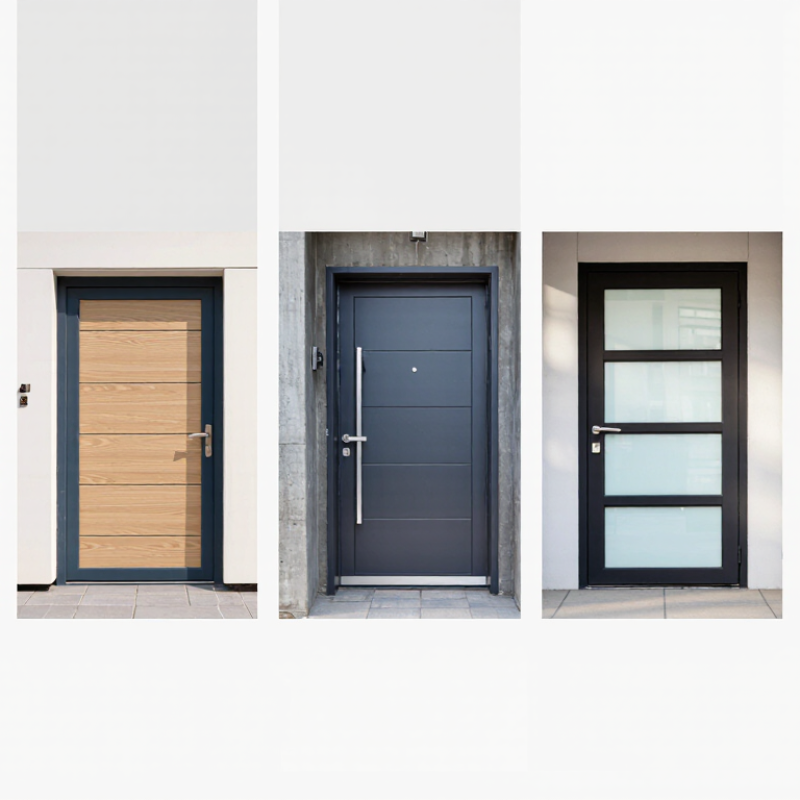
The main front door types available in 2026 include solid wood, steel, fiberglass, and doors with glass panels. Each suits different homes and priorities. Solid wood brings visible grain and a warm, substantial feel. It can swell or fade when exposed to moisture and strong sun, so the finish needs regular attention. A sheltered porch helps.
Steel doors offer a firm feel and can provide good insulation when properly fitted. Scratches may expose the surface to rust, so small chips should not be ignored.
Fiberglass is lighter to maintain and can mimic wood grain, though its texture may look less natural up close. The frame, weather seals, and installation matter as much as the door material.
Glass-panel designs bring daylight into a dim entry, but privacy and heat control deserve consideration. Frosted or textured glass can soften views from outside. Some homes also use wider pivot doors or paired entry doors, but these need enough space and careful hardware selection.
One detail is easy to underestimate: a heavy door that sticks after rain is frustrating, even when it looks beautiful. Check the opening, local climate, and daily use before choosing a style.
How Materials and Designs Shape Front Door Options
A front door’s material shapes its weight, upkeep, insulation, and feel in daily use. Wood offers visible grain and can be refinished, but exposed edges need regular care. Steel is often practical and sturdy; dents can be difficult to disguise. Fiberglass can mimic wood grain and resists moisture, though its finish and construction vary. A small glass panel can brighten a dim entry, while a solid slab gives more privacy. Details matter.
Design changes the impression as much as material does. A flush door suits a clean-lined home; raised panels feel more traditional. Sidelights widen a narrow-looking entry, but they also add glass to clean and consider for privacy. Zonda’s 2024 Cost vs. Value report estimated a national average cost of $2,355 for steel entry-door replacement, with $4,430 in resale value. That is an estimated 188.1% cost recouped, not a guaranteed return. Regional prices and project details differ. A useful figure, but not the whole story.
Tips: Check the door’s fit, seals, and finish in person. Ask for the full assembly’s energy-performance information, not just the slab. Then test the handle and lock; a beautiful door that sticks is still a frustration.
What Are the Top Entrance Front Door Types in 2026? - How Materials and Designs Shape Front Door Options
| Door type | Common materials and designs | Key advantages | Things to consider | Often suited to |
|---|---|---|---|---|
| Fiberglass | Molded fiberglass skins, often with an insulated core; available in smooth or wood-grain finishes and with optional glazing. | Resists moisture and does not rust; generally needs less upkeep than a natural-wood door. Insulated models can help limit heat transfer. | Quality and performance vary by construction. Deep damage may be difficult to repair invisibly, and direct, prolonged sun can affect some finishes. | Homeowners looking for a low-maintenance option with a range of traditional and contemporary looks. |
| Steel | Steel skins over a core, commonly foam-filled; offered in flush, paneled, and glazed designs. | Provides a sturdy entry barrier and can offer good insulation when the door and frame are properly specified and installed. | The surface can dent, and damaged coatings may allow corrosion. Thermal performance depends on the complete door assembly, not just the steel skin. | Practical entries where durability, security features, and value are priorities. |
| Solid wood | Wood boards or engineered wood construction; styles include traditional panels, natural grain, and custom details. | Offers a natural appearance and can be refinished or repaired. Its appearance can be tailored through wood species, stain, and design. | Requires regular finish maintenance. Changes in moisture and temperature can cause movement, so weather exposure and installation matter. | Entries where natural material, custom character, and the option to refinish are important. |
| Aluminum and glass | Aluminum frames with clear, frosted, or textured glazing; often used in clean-lined, modern designs. | Slim frames can admit daylight and create a contemporary appearance. Aluminum is lightweight and naturally resistant to rust. | Glass affects privacy and heat gain; glazing type, frame design, and weather seals influence overall energy performance. Aluminum can conduct heat unless thermally improved. | Modern homes and entries where daylight and a minimal frame are desired. |
| Composite | A combination of materials, which may include a reinforced frame, insulating core, and durable outer skins; designs vary by construction. | Can combine insulation, dimensional stability, and weather resistance. Some designs imitate the appearance of painted or grained wood. | “Composite” covers different constructions, so compare the specific materials, finish, warranty terms, and performance documentation. | Buyers seeking a balance of appearance, insulation, and reduced routine maintenance. |
| Selection note: Actual performance depends on the complete door system—including glazing, weatherstripping, frame, threshold, and installation—as well as local climate and exposure. | ||||
Comparing Security, Energy Efficiency, and Maintenance
What Are the Top Entrance Front Door Types in 2026?
For security, compare the door slab, frame, and lock together. A strong steel or fiberglass slab can still be vulnerable if the frame splits or the strike plate has short screws. Solid wood offers a substantial feel, but its performance depends on construction and upkeep. Glazed doors add daylight; choose designs with appropriately rated glass and secure glazing details. No material is automatically the safest.
Energy ratings help separate appearance from performance. The U.S. Department of Energy estimates that heating and cooling use about 43% of energy in a typical American home, so drafts around an entry door deserve attention.
ENERGY STAR guidance reports that certified residential windows, doors, and skylights can save up to 13% on energy bills compared with non-certified products. Actual savings vary by climate, installation, and the old door’s condition.
Check the NFRC label for comparable U-factor information, and inspect the weatherstripping at the threshold. Small details matter.
Maintenance changes the long-term choice. Fiberglass generally needs less routine refinishing than wood, while steel may need prompt attention if its coating is scratched and corrosion begins. Wood can swell or fade when exposed to rain and sun; periodic sealing helps, but it is easy to postpone. I would not choose by material alone. A poorly fitted premium door can still leak air.
Choosing a Front Door for a Home’s Entryway
What Are the Top Entrance Front Door Types in 2026?
Choosing a Front Door for a Home’s Entryway
A front door should suit the entryway, local weather, and daily routine. Steel doors often offer a sturdy, low-maintenance option, while fiberglass can imitate wood grain without the same upkeep. Solid wood brings natural warmth, but needs regular protection from moisture and sun. Glass panels brighten a dim hallway, though privacy and heat gain deserve attention. Imagine a west-facing door baking in afternoon light. Its finish and glazing matter as much as its style.
The 2024 Cost vs. Value report estimated a 188.1% cost recoup for a U.S. steel entry-door replacement. That figure reflects a modeled resale comparison, not a guaranteed return for every home. For comfort, compare product performance data, including U-factor and air-leakage ratings, rather than relying on material alone. A beautiful door can still feel drafty. I would also check the frame, threshold, and weatherstripping; these details are easy to overlook, and sometimes the first choice needs rethinking.
Tips: Measure the existing frame before shopping. Check that the door swings clear of furniture and steps. If choosing glass, consider frosted or textured panels for privacy. Ask an installer how the unit will be sealed, and inspect the sample in your entryway’s actual light.
Top Entrance Front Door Types in 2026
Typical service-life estimates by door material
Fiberglass, wood, and aluminum entry doors commonly have estimated service lives of about 20–30 years; steel doors are often estimated at 15–30 years. Actual longevity depends on installation, climate, exposure, and maintenance.