Top Alloy Steel Manufacturers in China
Choosing among the top alloy steel manufacturers in China requires more than comparing product lists or quoted prices. Alloy Steel grades can differ sharply in chemistry, strength, toughness, and heat-treatment response. A grade suited to a large forged shaft may not fit a precision-machined component. The details matter.
A useful evaluation starts with the intended application and the relevant grade standard. Then compare each manufacturer’s documented capabilities, including melting and refining processes, casting or forging options, heat treatment, machining, and inspection. Ask for current mill test certificates and traceability records for the specific product, not just general quality claims. If possible, review sample test results for chemical composition, tensile properties, hardness, and impact performance. Small differences can matter.
Production capacity and delivery planning deserve equal attention. Confirm available dimensions, minimum order quantities, lead times, packaging, and the process for handling nonconforming material. Certifications may help with supplier screening, but they do not replace product-specific evidence or a clear technical discussion. Some buyers may also need independent inspection before shipment.
There is no single best supplier for every project. A low price can look attractive, yet inconsistent documentation or limited grade availability may create costly delays. That concern is worth weighing carefully. This guide examines factors buyers can use to compare Chinese manufacturers more consistently, while recognizing that capabilities change and should be verified directly. A careful shortlist is more useful than a confident ranking without context.
Overview of China's Alloy Steel Manufacturing Industry
Top Alloy Steel Manufacturers in China
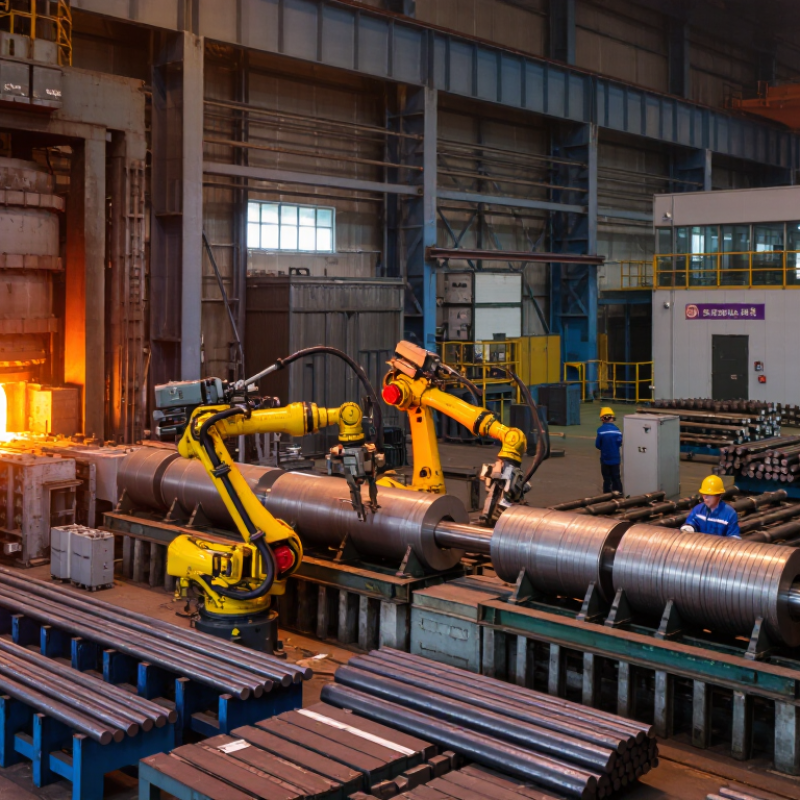
China’s alloy steel manufacturing industry serves machinery, energy, transport, construction, and equipment makers. Its production base ranges from large integrated mills to specialist processors. Common products include alloy bars, plates, pipes, and forged components. Their performance depends on composition, processing, and the intended service conditions.
Production can involve electric or blast furnaces, secondary refining, casting, rolling, and heat treatment. Each stage affects the finished steel. For example, controlled cooling and tempering can influence hardness and toughness. Some manufacturers manage several stages in-house; others focus on particular product forms. That difference matters. It can affect lead times, customization, and how closely a producer controls each batch.
A reliable evaluation looks beyond a catalogue. Buyers can review mill test certificates, chemical composition, mechanical properties, and batch traceability. Ask how samples are tested, and whether inspection records match the delivered heat number. Certificates help, but they are not the whole story. The industry is not perfectly uniform, and documentation can vary between suppliers. Even a small difference in heat treatment may matter for a shaft or pressure-bearing part, so specifications and verification deserve careful attention.
Top Alloy Steel Manufacturers in China - Overview of China's Alloy Steel Manufacturing Industry
| Data Dimension | Industry Overview | Relevance to Buyers | Reference / Scope |
|---|---|---|---|
| Industry scale | China produced approximately 1,019.1 million metric tonnes of crude steel in 2023. | This indicates the scale of China’s overall steelmaking base, but it is not a measure of alloy steel production alone. | World Steel Association, 2023 crude steel production statistics. |
| Industry scope | Alloy steel contains intentionally added alloying elements—such as chromium, nickel, molybdenum, vanadium, or silicon—to achieve specified properties. Classification can vary by standard and product category. | Confirm the applicable grade standard and product specification rather than relying on the general term “alloy steel.” | Definitions and classifications depend on the relevant material standard. |
| Common product families | Alloy structural steel, high-strength low-alloy structural steel, bearing steel, and tool and die steel are important product families. Stainless steel is also alloyed steel in the broad metallurgical sense, but is commonly treated as a separate product category. | Identify the product family first, since each has different performance requirements, processing routes, and inspection criteria. | General steel-industry product classifications. |
| Chinese alloy structural steel standard | GB/T 3077-2015 is the Chinese national standard titled “Alloy Structure Steels.” | Use the required standard edition when specifying grade, chemical composition, heat treatment, and acceptance criteria. | GB/T 3077-2015. |
| Chinese structural steel standard | GB/T 1591-2018 is the Chinese national standard titled “High Strength Low Alloy Structural Steels.” | Relevant to specified structural-steel applications; verify the required grade and delivery condition against the project specification. | GB/T 1591-2018. |
| Examples of alloy structural grades | Examples found in Chinese alloy-structural-steel specifications include 20Cr, 40Cr, 20CrMnTi, and 42CrMo. | Grade names alone do not define all requirements. Confirm the standard, size, heat-treatment condition, and inspection requirements. | Grade examples associated with GB/T 3077. |
| Typical applications | Alloy steels are used in components such as gears, shafts, fasteners, bearings, tooling, and machinery parts, depending on the grade and product form. | Match material selection to required strength, wear resistance, toughness, fatigue performance, and operating environment. | Applications vary by grade, design, and service conditions. |
| Production and processing | Steelmaking may use basic oxygen furnace or electric arc furnace routes. Subsequent operations can include secondary refining, continuous casting, rolling, heat treatment, and finishing. | Ask which process and delivery condition apply to the specific product; these influence consistency and final properties. | Common steel-industry process routes; actual routes vary by producer and product. |
| Quality verification | Typical checks may include chemical composition, dimensions, tensile properties, impact properties where specified, hardness, metallography, and non-destructive testing where required. | Define test methods, sampling frequency, acceptance limits, traceability, and certificate requirements in the purchase specification. | Inspection scope should follow the governing standard and buyer’s specification. |
| Procurement considerations | Key specification details include grade, product form, dimensions, standard and edition, heat-treatment condition, quantity, surface condition, and required documentation. | Providing complete requirements helps suppliers quote comparable products and reduces ambiguity during inspection and delivery. | General purchasing guidance; requirements depend on the application. |
This overview describes China’s alloy steel manufacturing industry without naming individual companies or brands. National crude steel output is included only as context and should not be interpreted as alloy steel output.

