How to Choose the Best Outdoor Canopies for Your Needs?

Choosing the right Outdoor canopies begins with more than comparing prices, colors, or advertised coverage. A canopy must suit the space, weather, and people using it. A small patio may need compact shade, while a market stall requires stronger frames, secure anchoring, and quick setup. Details matter. Wind direction matters. So does the ground beneath your feet.

Outdoor-living designer Joe Ruggiero offers a practical reminder: “Good outdoor design begins with how people actually live.” That idea should guide every canopy decision. Measure the area carefully, including doors, walkways, furniture, and nearby trees. Check the fabric’s UV resistance and water-shedding performance. Then examine the frame, joints, connectors, and anchoring system. A beautiful canopy is not useful if it twists during a gust or blocks an essential entrance.

There is no perfect choice. I have seen buyers focus on a large roof and overlook drainage, ventilation, or storage space. That mistake becomes obvious after the first storm. Consider daily use, seasonal conditions, cleaning effort, and replacement-part availability. For temporary events, portability may matter most. For a backyard, durability and visual fit may deserve greater attention. This guide explains how to compare materials, sizes, designs, safety features, and maintenance requirements. It also questions some popular assumptions. Bigger is not always better. Waterproof is not always comfortable. The best canopy is the one that performs reliably in your real environment.
How to Choose the Best Outdoor Canopies for Your Needs?

What Are Outdoor Canopies and What Purposes Do They Serve?

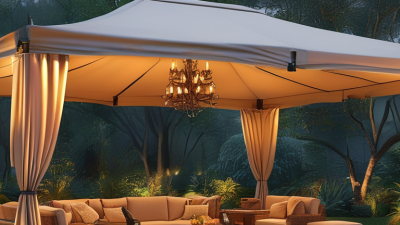
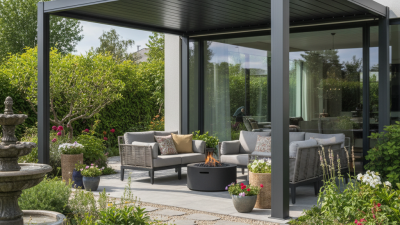
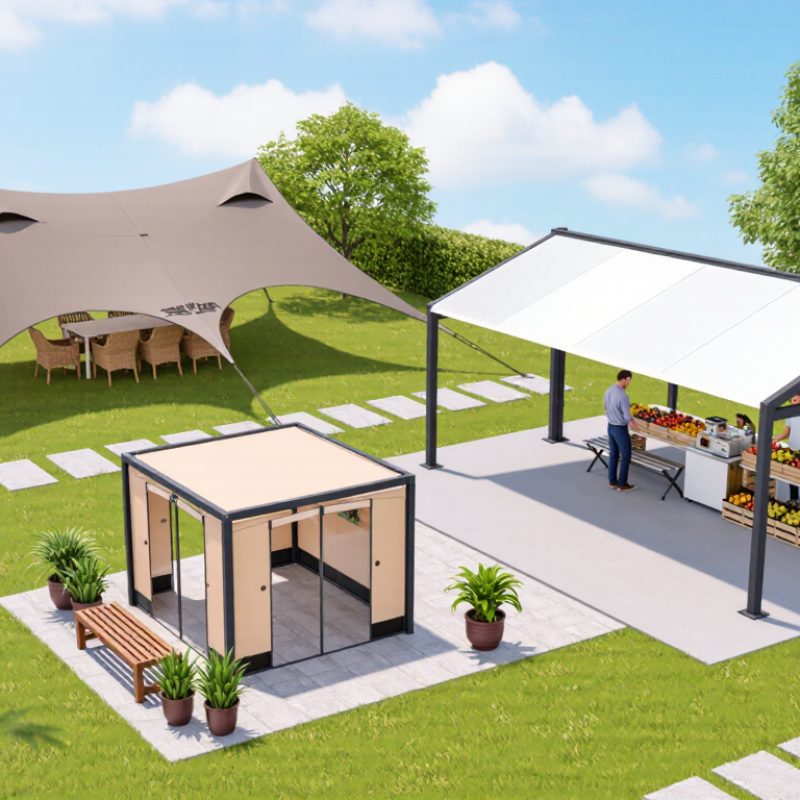
Outdoor canopies are temporary or semi-permanent shelters that create shade and cover outside. They may use fabric, metal, or treated wood, supported by poles, frames, or walls. In practical terms, a canopy changes how a patio, market area, campsite, or entrance feels within minutes. It can reduce direct sunlight, soften light rain, and define a usable outdoor room. It does not make every space weatherproof.

Their purposes differ by setting. A breathable fabric canopy can make a garden table comfortable during a hot afternoon. A stronger framed structure may protect equipment near a work area, provided it is properly anchored. I have found that airflow matters as much as shade; trapped heat makes an attractive shelter unpleasant. Check the canopy’s dimensions, fabric weight, water resistance, ventilation, and frame stability before choosing one. A low roof may block sunlight well but feel cramped around tall guests.

Local wind and ground conditions deserve careful attention. Loose soil, uneven paving, and sudden gusts can turn a light shelter into a hazard. Follow setup instructions, inspect seams and connectors, and remove the canopy when severe weather is expected. My own planning mistake was measuring only the table, not the walking space around it. Leave room for chairs, doors, and safe movement. Even a small extra margin can prevent daily frustration.

Which Canopy Size, Shape, and Coverage Best Fit Your Space?

Choosing an outdoor canopy starts with measuring the usable area, not guessing from the product label. Leave room for chairs, tables, walkways, and rain runoff. A 10-by-10-foot canopy provides 100 square feet, but furniture quickly consumes that space.

For seated dining, event-planning guidelines commonly allow 10 to 12 square feet per person. Therefore, a 10-by-20-foot canopy may suit roughly 16 to 20 guests before adding buffet tables or equipment. Standing gatherings need less room, often about 6 to 8 square feet per person. These figures are planning benchmarks, not guarantees. I once underestimated aisle space, and guests kept brushing against chair backs.

Shape affects coverage and stability. Square canopies fit compact patios and central tables. Rectangular models usually cover long dining tables more efficiently. Sloped roofs can move rain away, while peaked roofs improve headroom and air movement. The U.S. Department of Energy reports that exterior window shading can reduce solar heat gain by up to 65% on south-facing windows and 77% on west-facing windows. A canopy cannot deliver identical results, but its position still matters. Place wider coverage toward the harsh afternoon sun.

Check local wind, rainfall, and ground conditions before selecting a frame. ASCE 7-22 provides recognized methods for evaluating wind loads, while NOAA climate records help reveal typical weather patterns. A canopy rated for shade may not withstand severe weather. Fabric color, UPF certification, sidewalls, and drainage also change real coverage. Bigger is not always better. An oversized canopy can block ventilation and create awkward unused corners.

How to Choose the Best Outdoor Canopies for Your Needs? - Which Canopy Size, Shape, and Coverage Best Fit Your Space?

Outdoor canopy selection guide by dimensions, shape, coverage, and intended use
Canopy Size Approximate Coverage Common Shape Recommended Capacity Best Fit For Space Planning Guidance Important Considerations
6 × 6 ft
(1.8 × 1.8 m)
36 sq ft
(3.2 sq m)
Square 2–4 people Small seating area, product display, or personal shade Allow at least 2 ft of clearance around the canopy for access and airflow. Compact and easy to position, but limited for tables, equipment, or large groups.
8 × 8 ft
(2.4 × 2.4 m)
64 sq ft
(5.8 sq m)
Square 4–6 people Small patio gatherings, market stalls, or a café table Suitable for a compact table with chairs when entrances remain unobstructed. A practical choice where floor space is restricted; check the exact interior height.
10 × 10 ft
(3.0 × 3.0 m)
100 sq ft
(9.3 sq m)
Square 6–10 people Family events, dining tables, small outdoor booths, or buffet service Provides a balanced layout for seating, a central table, or light event equipment. One of the most versatile sizes, but it may not provide full rain protection when sides are open.
10 × 15 ft
(3.0 × 4.6 m)
150 sq ft
(13.9 sq m)
Rectangular 10–15 people Long dining tables, buffet lines, reception areas, or vendor displays Place the long side parallel to the main activity area to improve movement and organization. Offers more directional coverage than a square canopy; anchoring is especially important on the longer sides.
10 × 20 ft
(3.0 × 6.1 m)
200 sq ft
(18.6 sq m)
Rectangular 15–25 people Large gatherings, food service, registration areas, and covered seating Plan separate zones for entry, seating, serving, and storage rather than filling the entire floor area. Requires a larger level site and stronger anchoring; verify transport and setup requirements.
12 × 12 ft
(3.7 × 3.7 m)
144 sq ft
(13.4 sq m)
Square 12–18 people Medium-sized parties, outdoor dining, and lounge seating Works well for a central table or several smaller seating arrangements with open circulation paths. The square footprint gives flexible furniture placement but needs adequate clearance on every side.
12 × 20 ft
(3.7 × 6.1 m)
240 sq ft
(22.3 sq m)
Rectangular 20–30 people Community events, larger dining layouts, exhibits, or weather-sensitive equipment Use the long dimension to create a clear traffic route, with seating or displays arranged along the sides. A larger canopy catches more wind and may require additional ballast, tie-downs, and setup personnel.
12 ft diameter
(3.7 m diameter)
Approximately 113 sq ft
(10.5 sq m)
Round 6–10 people Circular seating, informal conversation areas, and decorative event layouts Leave a clear perimeter because the curved edge reduces usable space near the sides. Encourages social interaction, but it is less efficient than a rectangular canopy for rows of tables or displays.
16 ft diameter
(4.9 m diameter)
Approximately 201 sq ft
(18.7 sq m)
Round 12–18 people Central lounge areas, ceremonies, hospitality spaces, and larger social groups Position it in an open area with sufficient clearance for curved entrances and circulation. The wider footprint requires careful site measurement and reliable anchoring, especially in exposed locations.

Coverage is calculated from the canopy footprint and does not represent fully enclosed usable space. Before choosing a canopy, measure the available area, furniture dimensions, entrance clearance, overhead obstructions, ground conditions, and local wind or weather requirements. Always follow the canopy manufacturer’s instructions for anchoring and safe operation.

How Do Canopy Materials Affect Durability and Weather Protection?

Choosing an outdoor canopy starts with its material, not its color or price. Fabric determines UV resistance, rain performance, drying speed, and maintenance needs. Solution-dyed acrylic usually protects color better because pigment runs through the fibers. Coated polyester can offer strong water resistance at a lower cost. However, its coating may crack after repeated folding, heat, or abrasion.

Weather stress is increasing. NOAA’s 2023 Billion-Dollar Weather and Climate Disasters report recorded 28 costly U.S. weather events. That statistic does not measure canopy failure, but it signals harsher exposure for outdoor structures. ASTM G154 testing uses ultraviolet lamps and condensation cycles to examine accelerated weathering. Ask for test results, not vague claims like “all-weather.” Aluminum frames resist corrosion better than untreated steel, while galvanized steel can provide greater strength when its protective coating remains intact. Small details matter.

I have seen weak points appear first at seams, eyelets, and frame joints. A thick fabric cannot compensate for poor stitching. Check fabric weight, coating type, seam construction, and wind-rating documentation. Polyethylene blocks rain effectively, but it may feel less breathable beneath strong sunlight. Vent panels reduce heat buildup, although they can admit wind-driven rain. No material is perfect. Local climate, storage habits, and installation quality often matter as much as the fabric itself.

How Canopy Materials Affect Durability and Weather Protection?

Comparative performance ratings for common outdoor canopy materials. Higher scores indicate stronger typical performance.

PVC-coated polyester generally provides the strongest waterproofing and abrasion resistance, while acrylic-coated polyester offers excellent UV stability and color retention. Polyethylene is highly water-resistant but can provide less tear strength than woven fabrics. Actual performance depends on fabric weight, coating quality, stitching, frame design, installation, and maintenance.

Which Setup Features Make an Outdoor Canopy Safe and Convenient?

A safe outdoor canopy begins with the ground, not the fabric color. Choose level, firm ground without loose stones or hidden drains. On paving, use wide weighted feet instead of ordinary stakes. Check nearby branches, cables, and walls before unfolding the frame. Leave enough headroom for people to walk comfortably. Small details matter.


A sturdy frame should have locking joints that click into place clearly. Adjustable legs help compensate for slightly uneven ground. For grass, combine stakes with tensioned guy lines. Do not depend on the canopy’s weight alone during changing weather. Secure every corner, but keep walkways free from ropes. A sloped roof helps rainwater run off instead of pooling overhead. Ventilation panels can reduce heat and improve comfort. Read the care label.


Convenience also depends on how easily one person can inspect and operate the setup. Look for color-coded joints, a compact storage bag, and parts that are easy to replace. Keep the entrance clear, especially when chairs or serving tables are inside. Inspect seams, connectors, and anchor points before each use. I once underestimated a calm afternoon breeze. The canopy looked secure. Later, one leg shifted because the ground was softer than expected. That mistake taught me to test every anchor by hand and check the surface beneath each foot. A quick inspection is never wasted.

How Should You Compare Canopy Costs, Maintenance, and Storage Needs?

How to Choose the Best Outdoor Canopies for Your Needs?

Canopy price should not be judged by the invoice alone. Compare the frame, cover, sidewalls, anchors, delivery, and installation costs. A lower-priced model may need replacement parts sooner. Calculate its expected cost over three to five years. This gives a more realistic comparison.

Maintenance affects both time and performance. Look for washable fabric, reinforced seams, replaceable panels, and rust-resistant hardware. Check how water drains after heavy rain. Pooling water can stretch fabric and stress the frame. I once underestimated cleaning time because the canopy looked simple. That mistake made seasonal setup more tiring than expected. Ask about repair access, not only warranty length.

Storage needs are easy to overlook. Measure the packed canopy, not just its open size. Confirm whether it fits your garage, shed, or vehicle. The cover should be completely dry before storage. Otherwise, mildew can develop in folded fabric. A breathable storage bag can help, but it cannot fix damp packing. Keep poles organized by section. Missing one connector can delay the next setup.

Tips: Compare total ownership costs, not just purchase prices. Request replacement-part prices before buying. Inspect packed dimensions and carry weight. Choose a design your team can safely assemble. If maintenance sounds inconvenient now, it will probably become worse later.